Skip to content
CampeloLabs

Blog

Practical AI guides for founders

Short, useful reads on growing your startup with AI, safely. From the team behind AI Operating System for Startups. See also AI startups from Y Combinator.

A single engineer embedded at a customer site, laptop open beside the customer's own operations team, wiring an AI system into their live workflow

July 25, 2026 · 15 min read

Forward Deployed Engineer: A Founder's Guide

A forward deployed engineer sits inside your customer's operation and makes your product actually work there: mapping the real workflow, wiring into their systems, and tuning until the numbers move. Palantir made the role famous, and in 2026 nearly every serious enterprise AI company is hiring for it. The founder of a Y Combinator company running AI support agents for DoorDash calls this role the biggest bottleneck in every enterprise AI deployment. Here is what the job actually is, what it costs you per logo, when you need one, and which parts an agent can now absorb.

Read more →
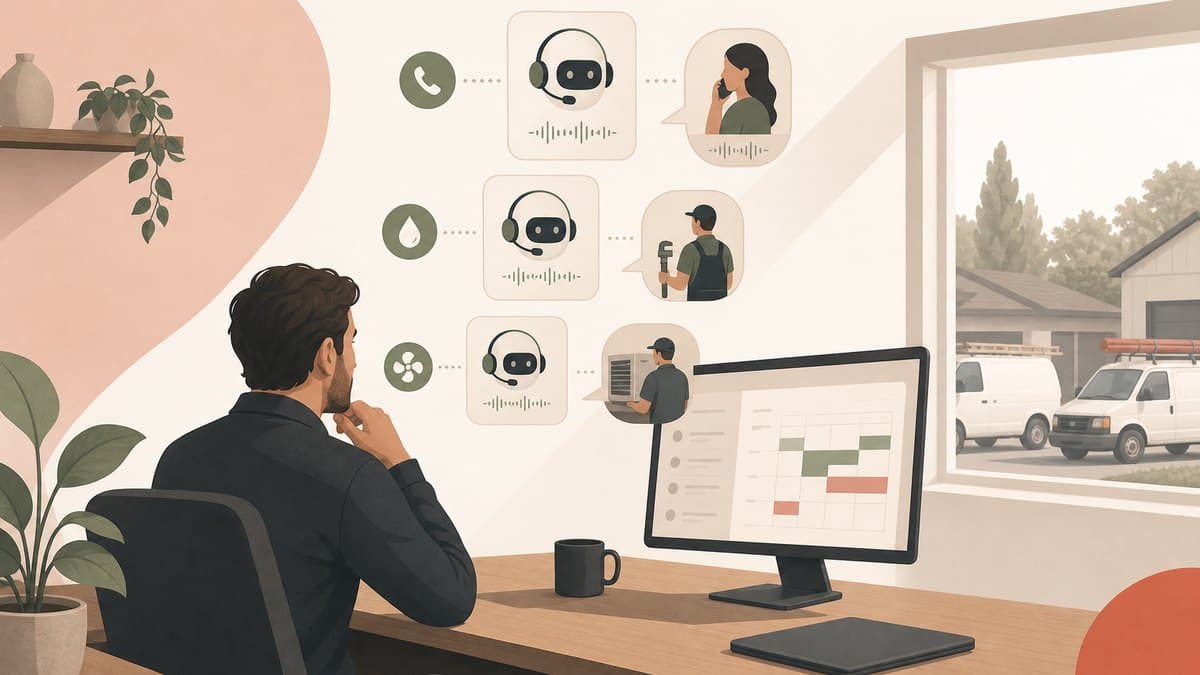

A single founder in a small home-services dispatch office orchestrating AI voice agents that answer phones and book jobs, service trucks visible outside

July 24, 2026 · 8 min read

AI for Field Service: The Founder Playbook

Field service is a phone business. Someone's air conditioning dies, they call three companies, and the first one that picks up and books the visit wins the job. The company that lets the call ring out just lost thousands of dollars. That simple economics is why AI voice agents have become one of the sharpest wedges in vertical AI, and why Avoca, a Y Combinator company building what it calls the AI workforce for the physical economy, is now valued at a billion dollars. Here is what AI for field service actually does, why the phone is the whole game, and the founder playbook you can copy whether you sell to these businesses or run one.

Read more →
A single founder at a workbench choosing an AI-native accounting system over a stack of legacy binders, ledgers reorganizing themselves in the background

July 23, 2026 · 8 min read

AI ERP: A Startup Founder's Guide

For most of software history the general ledger, the system that records every dollar a company moves, barely changed. The rest of the finance stack modernized around it while the core stayed slow, rigid, and consultant-heavy. AI ERP is the attempt to rebuild that core around a language model, so the software reads documents, drafts entries, and closes the books instead of just storing numbers you key in by hand. Campfire, an AI-native ERP out of Y Combinator, is winning startups off NetSuite by betting the whole company on that idea. Here is what an AI ERP actually is, why the opening exists, and what founders in any category can copy from the playbook.

Read more →
A single founder at a workbench choosing between coding tools, one team beside them shipping fast while another works with an outdated tool falling behind

July 22, 2026 · 8 min read

AI Developer Tools: The 3x Productivity Gap

For decades the software your team ran barely decided who won. The best CRM against the worst one did not 3x anyone's revenue. AI developer tools broke that rule. On Greylock's Change Agents series, Box CEO Aaron Levie argues that the coding tool a team uses is now worth a two to three times difference in what it ships, and that the gap compounds every week the frontier moves. This is a guide to why that is suddenly true, what the real categories of AI developer tools are, and how a founder should choose without betting the company on hype.

Read more →
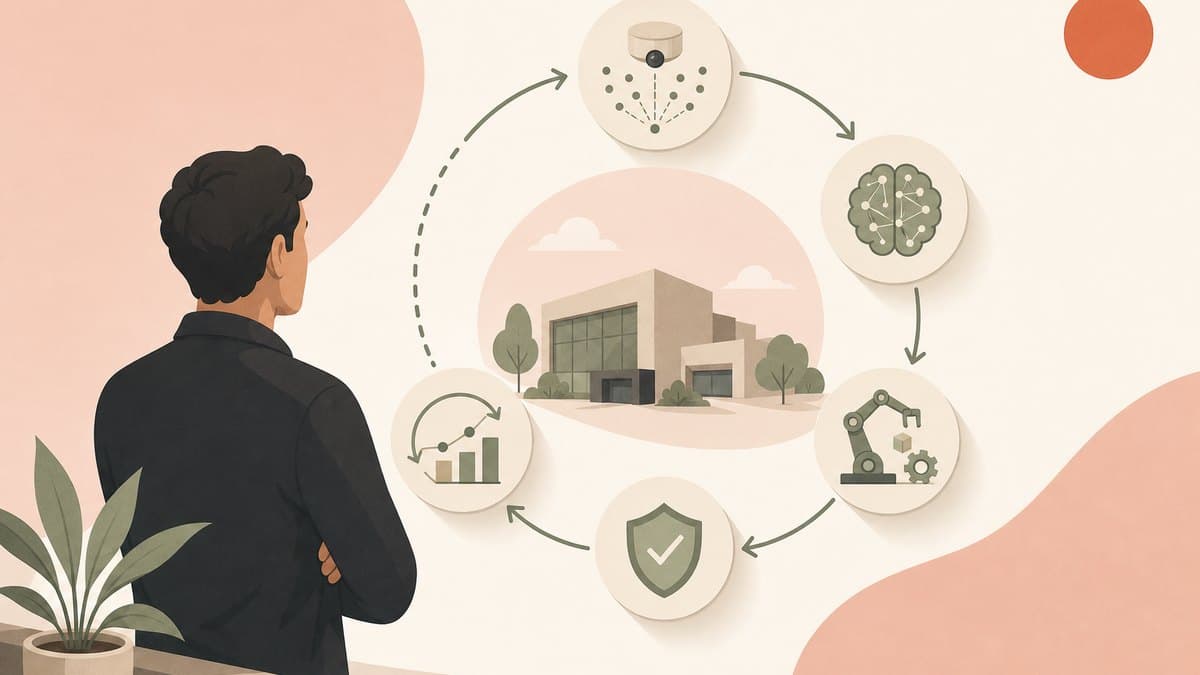
A single founder watching a company run as a closed AI loop that senses inputs, acts through tools, checks its own work at a quality gate, and feeds results back to improve the next cycle

July 21, 2026 · 8 min read

Self-Improving AI: A Founder's Guide

Self-improving AI sounds like a research fantasy: a model that rewrites itself into something smarter. There is a nearer version founders can build this quarter. Instead of a model that improves its own weights, you wire parts of your company as AI loops that watch what happens, act, check their own work, and adjust, so the business gets a little better every cycle without anyone filing a ticket. Y Combinator general partner Tom Blomfield laid out the blueprint in a talk on building a self-improving company. Here is how to turn it into something you can actually run.

Read more →
A single founder choosing between two paths to customize an AI model, a cheap retrieval layer feeding a base model on one side and an expensive fine-tuned model on the other, with the retrieval path lit up

July 20, 2026 · 9 min read

RAG vs Fine-Tuning: The Cheaper First Move

Every founder building on an LLM hits the same fork. The model is good but generic: it does not know your product, your policies, or your customers. So you reach for the two levers everyone names, RAG and fine-tuning, and the internet frames them as rivals. For most startups they are not, and treating the choice as an either/or is how teams burn months and a lot of money on the wrong one. The honest default, the one infrastructure teams at OpenAI, IBM, and AWS now give, is start with RAG.

Read more →