Skip to content
CampeloLabs

Blog

Practical AI guides for founders

Short, useful reads on growing your startup with AI, safely. From the team behind AI Operating System for Startups. See also AI startups from Y Combinator.

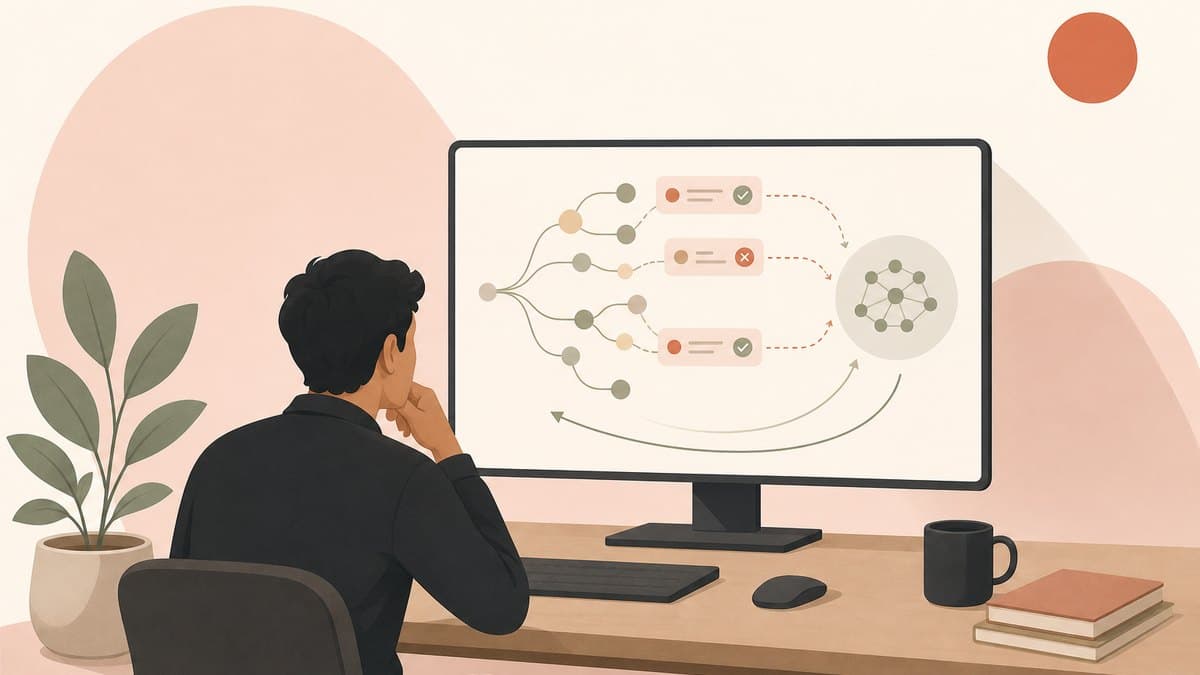
A founder designing agent experience: one interface for a human operator and a machine-readable one for an AI agent

September 8, 2026 · 14 min read

Agent Experience: When Your User Is an Agent

Two different jobs share the name agent experience: the older one about people in a contact center, and the newer one about AI agents as users of your product. This is about the second. Box CEO Aaron Levie frames the founder decision more sharply than anyone, and it is not the decision most teams think they are making. Here is what agents actually need from a product, what your human users still need at the same time, and where the security cost comes due.

Read more →


A founder choosing between a chat box and an explorable interface for an AI product

September 7, 2026 · 13 min read

Conversational UI: When Not to Use Chat

Almost every AI product starts as a text box with a send button, because chat is fast to build and demos well. Then usage stays thin and nobody can say why. Perplexity's Aravind Srinivas has the cleanest test for it, and it takes one question about how you book a flight. Here is what conversational UI is actually good at, the four places it quietly loses, why the interface you pick also decides what you can monetize, and a decision rule you can run on your own product in an hour.

Read more →
A founder deciding which capabilities AI scaling laws will deliver and which to build a verifier for today

September 6, 2026 · 15 min read

AI Scaling Laws: What They Actually Promise

Every AI roadmap argument ends at the same fork: wait for the next model, or build it yourself. Both sides cite AI scaling laws, and the laws are narrower than either side admits. They describe falling prediction error, not new skills. François Chollet has the sharpest evidence for the gap: base models were scaled 50,000 times while their ARC-AGI scores stayed near the floor. Here is what actually closed it, and the one yes-or-no question about your own domain that decides how much of the next two years lands in your product for free.

Read more →
A founder reviewing agent traces and corrections feeding back into a system that improves with every use

September 5, 2026 · 14 min read

Continual learning AI: what to build first

Continual learning AI is the idea that your product should get better the more people use it, instead of only when the next base model ships. Trajectory co-founder Arjun Karanam laid out what has to exist before any of it is possible, and almost none of it is machine learning. It is complete traces, a feedback path that captures corrections rather than ratings, evals drawn from your own traffic, and tool responses that say what actually happened. Here is the founder version, plus the one decision that makes it a system problem: what goes in the weights and what goes in the context.

Read more →
A founder deciding which steps of a workflow to hand to a frontier model and which to keep on a cheaper tier

September 4, 2026 · 12 min read

GPT-6 Astra: What Founders Should Do

GPT-6 Astra is out, and the AGI argument around it does not change anything you ship this quarter. Three things in the launch do: it is the best computer-use model OpenAI has released, it meets the Critical threshold for cybersecurity under the company's own Preparedness Framework, and it costs several times what you are probably paying today. Here is what the launch actually says, read as a founder who has to pick a model, price a feature, and answer a security questionnaire.

Read more →
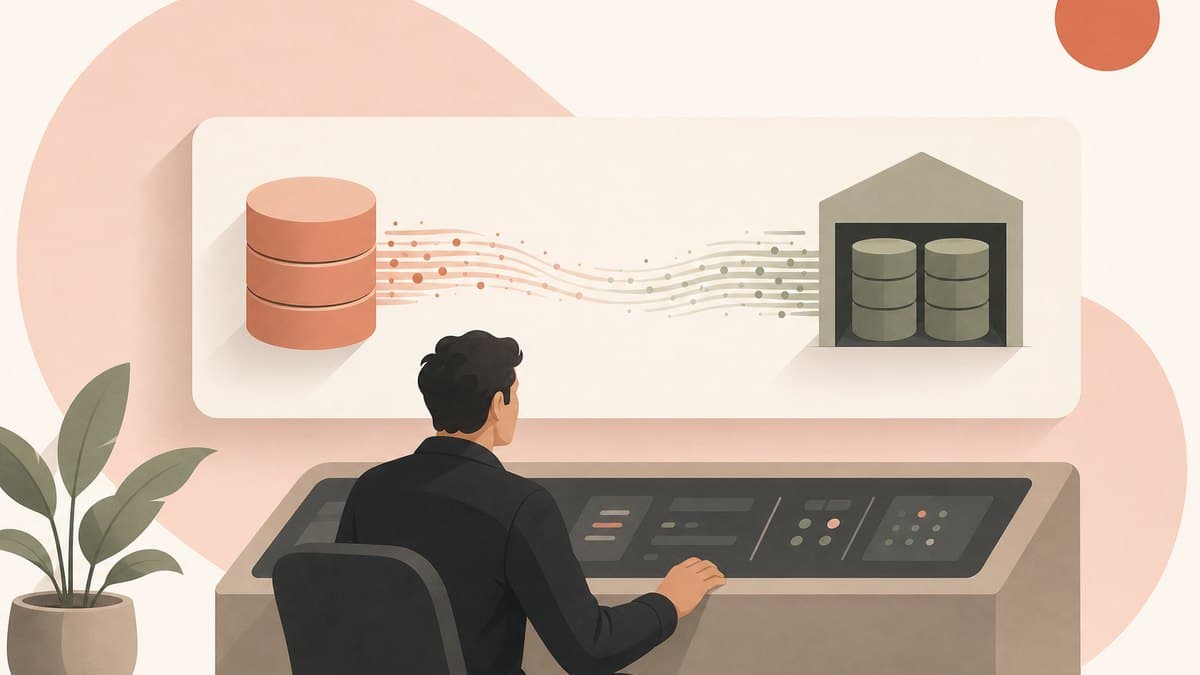
A founder at a console watching a single continuous stream of data move from a production database into a warehouse in real time

September 3, 2026 · 16 min read

Real Time Data Streaming for AI Startups

Every startup data stack starts as batch, and for most companies that stays correct for years. The day it stops being correct, nobody notices, because the data does not get less accurate: the decisions on top of it just start happening faster than the sync. Artie's founders, Robin Tang and Jacqueline Cheong, built a company on that moment and raised a $12 million Series A in January 2026. The useful part of their story is not the pitch. It is the numbers: what a real time pipeline actually costs to build in house, the failure modes that turn it into a two year project, and why agents have moved the line between batch and streaming.

Read more →